Nordi Medical Nordi Medical

7 Tips Reusable vs Disposable Surgical Gowns Cost Guide

Time:2026-10-19 Author:Oliver
0%

Choosing surgical gowns is not simply a matter of comparing prices on a supplier’s webpage. Hospitals must consider protection, comfort, laundering, storage, replacement, and daily workflow. A gown that costs less today may create higher expenses after repeated washing, repairs, or premature disposal. In a busy operating room, even small cost differences can multiply across hundreds of procedures each month.

Reusable vs. Disposable surgical gowns: A cost-benefit analysis. This guide introduces seven practical tips for evaluating both options. It examines purchase prices, service life, cleaning requirements, labor, waste handling, and performance during clinical use. For example, a reusable gown may require inspection after every wash, while a disposable gown can simplify turnover but increase packaging and waste volume. The details matter.

Real-world decisions are rarely perfect.

Reliable evaluation should combine supplier documentation with local experience. Infection prevention teams, operating-room nurses, procurement staff, and finance managers may notice different risks. Their observations should be compared with product standards, laundering records, and actual consumption data. A simple spreadsheet can reveal whether a gown used 40 times truly costs less than several disposable alternatives.

There is no universal winner. Facility size, procedure type, staffing, laundry access, and sustainability goals all influence the result. Some assumptions may prove wrong after six months of use. That is why this cost guide emphasizes measurable evidence, transparent calculations, and regular review rather than attractive claims alone.
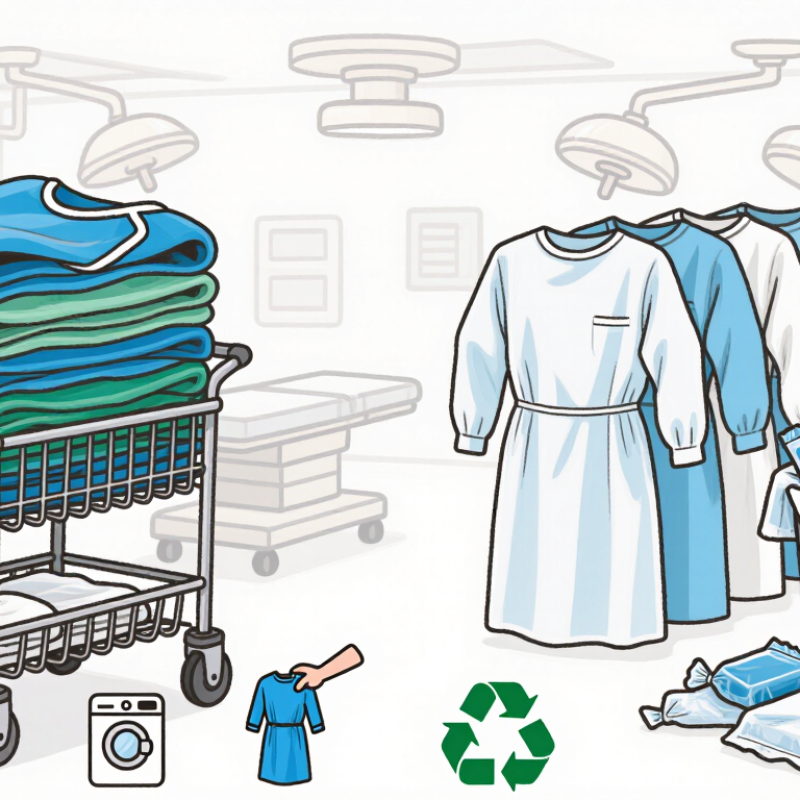
7 Tips Reusable vs Disposable Surgical Gowns Cost Guide

Types and Purposes of Reusable and Disposable Surgical Gowns

Disposable and reusable surgical gowns serve different clinical purposes. Disposable gowns are designed for single-use protection during procedures with high contamination or fluid exposure. They arrive sterile when packaged appropriately, which simplifies preparation and reduces laundry handling. Their materials may include nonwoven layers, reinforced panels, or fluid-resistant coatings. Always check the gown’s protection level, cuff fit, and seam coverage before use.

Reusable gowns are made from durable woven fabrics and can withstand repeated washing and sterilization. They often provide a softer feel and consistent drape during long procedures. Hospitals may prefer them for routine operations with controlled exposure. However, performance depends on proper inspection, cleaning, repair, and replacement. A damaged seam is not a minor detail. It can weaken protection at the wrong moment.

Tip: Compare cost per use, not purchase price. Include laundering, sterilization, labor, storage, and waste handling. A simple price comparison can mislead.

In practice, the best choice depends on procedure length, fluid risk, staff comfort, and available processing systems.

Tip: Ask whether the gown remains comfortable after repeated washing. This detail is easy to overlook.

My own assessment would also include fit testing and staff feedback, because a technically strong gown may still be avoided if sleeves ride up or heat builds around the shoulders.

Key Cost Factors in Gown Selection and Ownership

7 Tips Reusable vs Disposable Surgical Gowns Cost Guide

Gown selection should begin with total cost of ownership, not unit price. A disposable gown may cost less at checkout, but each procedure adds purchasing, storage, and waste expenses. A reusable gown requires acquisition, collection, laundering, inspection, repair, and replacement. Calculate cost per use. Include staff handling time and transport distance.

Utilization changes the answer. A reusable gown used 75 times spreads its purchase cost effectively. Poor inventory control can reduce that benefit quickly. Track loss, damage, laundry rejects, and emergency purchases. Energy and water prices also matter. A 2009 comparative life-cycle assessment reported reusable gowns used 64% less energy, 66% fewer greenhouse-gas emissions, 84% less water, and 84% less solid waste than disposable gowns. Results depend on laundering efficiency and transport patterns. The numbers are not universal.

Barrier performance still controls the decision. Select the required protection level under applicable surgical textile standards. Do not downgrade protection to save money. Review storage space, sterilization workflows, and peak-day demand. A regional health-care procurement report found that labor and logistics can represent a substantial share of hospital supply costs, although percentages vary widely by facility. That uncertainty deserves attention. One recurring costing mistake is ignoring replacement cycles. Model three years, then test five years. Add a sensitivity case for higher utility prices, damaged stock, and unexpected procedure volume. The cheapest option on paper may fail during a busy Monday.

7 Tips Reusable vs Disposable Surgical Gowns Cost Guide - Key Cost Factors in Gown Selection and Ownership

Tip Cost Factor Disposable Gowns Reusable Gowns Illustrative Cost Range Ownership Impact
1 Compare the purchase price with the full use-cycle cost Purchased for one procedure and discarded after use. The price generally includes the garment, packaging, and initial distribution. Purchased once but used repeatedly. Total cost includes laundering, inspection, repair, replacement, storage, and inventory management. Disposable: $2–$10/use
Reusable purchase: $35–$80/gown
A lower purchase price does not always mean a lower cost per use.
2 Calculate laundering and processing costs No routine laundering is required. Disposal, waste handling, and collection remain part of the workflow. Requires collection, sorting, washing, drying, finishing, quality checks, and redistribution through an internal or contracted laundry service. Laundry and processing: $1.50–$4.00/use Labor, utilities, transport distance, volume, and service-level requirements can materially change the result.
3 Match the gown to the required protection level Fluid-resistant and barrier-enhanced versions usually cost more than standard non-reinforced gowns. Sterile packaging may add cost. Durable reusable fabrics may be suitable for many routine procedures, while high-risk fluid exposure may require a compatible barrier system or disposable option. Protection upgrades commonly add 20%–100% to the base gown cost. Avoid selecting by price alone; protection performance and applicable standards must come first.
4 Estimate useful life and replacement rate Each gown has one intended use. The annual quantity is approximately equal to the number of gown uses. Useful life depends on fabric, laundering conditions, repairs, seam strength, and inspection criteria. Many programs plan around approximately 50–75 wash cycles, but actual life varies. Replacement reserve: 5%–20% of the reusable inventory annually Track failed inspections, repairs, stains, tears, and barrier degradation to establish a site-specific replacement rate.
5 Include inventory, storage, and logistics Requires larger recurring deliveries and storage for unopened packages. Stockout protection may require safety inventory. Requires enough garments to cover use, laundry turnaround, damaged items, and peak demand. A practical starting point is often 3–5 complete inventory turns, depending on turnaround time. Inventory carrying cost: typically 2%–8% of garment value per year Consider shelving, transport containers, tracking, shrinkage, emergency stock, and delivery frequency.
6 Measure waste and disposal expenses Creates a new gown waste stream after each use. Disposal costs may increase when contaminated materials require regulated handling. Reduces the number of gown units discarded, but unusable textiles, packaging, repairs, and transport still create waste. Waste handling: $0.10–$1.00/use
depending on waste type and local rules
Use local waste contracts and actual weights to replace planning estimates with measured data.
7 Calculate the break-even point before changing systems Annual cost is generally driven by the number of procedures, gown price, freight, storage, and disposal. Annual cost is driven by initial inventory, laundering, repairs, replacement, logistics, and quality-control labor. Break-even uses = Reusable purchase price ÷ (Disposable cost per use − Reusable processing cost per use) Example: $50 ÷ ($6.00 − $2.50) ≈ 15 uses, before inventory, replacement, and disposal adjustments.
Planning note: Cost ranges are representative budgeting estimates in U.S. dollars, not quoted prices. Actual costs vary by gown protection level, local labor and utility rates, laundry contract, procedure volume, transportation, waste classification, and applicable healthcare requirements. Use measured facility data for a final total-cost-of-ownership comparison.

Seven Practical Tips for Comparing Gown Expenses

Comparing reusable and disposable surgical gowns requires more than checking the purchase price. Tip one: record the actual number of gowns used per procedure. Tip two: include shipping, storage, and emergency inventory. A gown used once may look inexpensive, but frequent reordering creates hidden costs. The U.S. Environmental Protection Agency’s sustainable procurement guidance recommends evaluating products through their full life cycle, not only their unit price.

Tip three: calculate laundry costs per usable cycle, including water, energy, labor, repairs, and transport. Tip four: measure replacement rates. A reusable gown lost after ten cycles cannot be priced like one surviving fifty cycles. A peer-reviewed life-cycle assessment in the American Journal of Infection Control reported that reusable isolation gowns could reduce solid waste by about 84%, depending on laundering assumptions. The same analysis found meaningful reductions in climate impact. Results vary by facility.

Tip five: confirm barrier performance under AAMI PB70 classifications. Cheaper protection is not a saving. Tip six: separate routine use from high-contamination procedures, because disposal patterns may differ. Tip seven: build a sensitivity table with low, average, and high utilization. My first spreadsheet usually looks too optimistic. A missing repair charge can change the answer.

The Association for the Advancement of Medical Instrumentation stresses documented processing controls and consistent quality checks. Therefore, compare gowns by cost per protected use, not cost per item. Include staff time, rejected garments, inventory space, and waste handling. Review the figures quarterly; surgical volume rarely stays still.

Lifecycle, Maintenance, and Waste Management Costs

7 Tips Reusable vs Disposable Surgical Gowns Cost Guide

Lifecycle cost begins before the gown reaches the operating room. Reusable gowns require purchase, collection, sorting, washing, drying, inspection, repair, and replacement. Disposable gowns usually shift more spending toward repeated purchasing and regulated waste handling.

A peer-reviewed life-cycle assessment reported that reusable surgical gowns used 64% less energy, produced 66% fewer greenhouse-gas emissions, and generated 84% less solid waste than comparable disposables under its studied conditions (Journal of Cleaner Production, 2012).

Results vary with transport distance, laundry technology, and gown durability.

Maintenance can decide the financial outcome.

A laundry log should track wash cycles, repair frequency, rejected items, and replacement rates. Missing data creates false savings. The U.S. Environmental Protection Agency’s sustainable materials guidance supports measuring material use, waste, and recovery across the full lifecycle, not only purchase price.

A reusable program may lose its advantage when gowns are over-dried, frequently damaged, or shipped long distances. Energy costs matter too.

Waste management remains a visible expense.

Disposable gowns add packaging, storage demand, collection labor, and treatment charges after use. Reusable gowns reduce routine waste volume, but damaged textiles still require controlled disposal or recycling pathways.

A 2021 hospital life-cycle review in the Journal of Hospital Infection found environmental and cost results depended heavily on utilization rates and laundering systems.

That is the uncomfortable part. No option wins everywhere.

Procurement teams should model local utility prices, labor, transport, infection-control requirements, and actual gown losses before changing supply systems.

How to Choose the Most Cost-Effective Gown Option

Choosing a surgical gown by purchase price alone can create an inaccurate budget. A reusable gown may cost more initially, yet repeated use can reduce cost per procedure. A disposable gown offers predictable pricing, simpler handling, and no laundry investment. The right choice depends on procedure volume, staffing, storage, and required protection. Start with real data. Record gown use for four weeks, including damaged items, laundry loads, and urgent replacements.

Calculate total cost per use, not just unit price. Include purchasing, transport, washing, drying, inspection, repairs, packaging, disposal, and staff time. For reusable gowns, divide the purchase price by verified service cycles.

Do not assume the maximum cycle listed on a specification sheet. Clinical wear, harsh detergents, and failed fasteners may shorten service life.

For disposable gowns, measure waste volume and replenishment frequency. A low unit price can become expensive when unused stock expires or tears during opening.

Protection must remain central. Check barrier performance against blood, fluids, heat, and the procedure’s duration. Match the gown to actual risk, rather than choosing the heaviest option every time.

A mixed inventory may be more economical: reusable gowns for routine cases and disposable gowns for unpredictable demand.

Ask infection prevention staff and laundry specialists to review trial results. Run a small pilot, compare cost per use, and inspect gowns after washing.

Our first calculation may be wrong. Adjust it when actual service data reveals hidden labor or replacement costs.

FAQS

Why should gown costs be compared beyond the purchase price?

Include shipping, storage, emergency stock, labor, waste handling, and replacement costs. The cheapest item may cost more later.

What should be measured for reusable gowns?

Track collection, sorting, washing, drying, inspection, repairs, and replacement. Record each usable cycle.

How can laundry costs affect the comparison?

Count water, energy, labor, transport, repairs, and drying. Over-drying can shorten gown life.

How does gown durability change the calculation?

A gown lasting ten cycles should not be priced like one lasting fifty. Damage records matter.

What environmental differences may appear?

Under some conditions, reusable gowns use less energy and create less waste. Results vary by laundry systems and transport distances.

Should all procedures use the same gown-cost model?

No. Separate routine procedures from high-contamination procedures. Disposal and protection needs may differ.

How should protective performance be included?

Confirm the required barrier classification before comparing prices. Lower protection is not a real saving.

What should a useful cost spreadsheet contain?

Use low, average, and high utilization scenarios. Include rejected garments, storage space, and staff time.

How often should gown costs be reviewed?

Review the figures quarterly. Surgical volume changes, and my first spreadsheet is usually too optimistic.

Conclusion

Reusable vs. Disposable surgical gowns: A cost-benefit analysis. This guide explains how reusable and disposable surgical gowns serve different clinical purposes and outlines the factors that influence their total cost. Purchase price is only one consideration; durability, protection level, staff time, laundry requirements, storage, replacement frequency, waste disposal, and supply reliability can significantly affect ownership expenses.

The article offers seven practical tips for comparing gown costs, including calculating cost per use, reviewing cleaning and maintenance needs, estimating waste-management expenses, and considering workflow efficiency. It also examines the complete lifecycle of each option, from procurement and daily use to laundering, disposal, and replacement. By evaluating both direct and indirect expenses alongside safety, comfort, environmental goals, and operational demands, healthcare facilities can choose the gown option that provides the best long-term value for their specific needs.

Oliver

Oliver

Oliver is a seasoned marketing professional with a wealth of expertise in driving brand awareness and engagement. With a deep understanding of our company's product offerings, he consistently delivers high-quality content that enriches our professional blog. His insights not only shed light on......