Nordi Medical
Why does my bandage keep falling off after a shower? Often, the answer is simple: water softens the adhesive, while soap, lotion, sweat, and damp skin weaken its grip. A loose edge can catch on a towel or sleeve, then peel away. Small details matter. A bandage placed over wet skin may fail before you finish dressing.
A 2013 evidence review by wound-care specialists, including Cynthia C. McNichol, reported medical adhesive-related skin injury rates ranging from 3.4% to 25% across the studies it examined. Those figures concern skin injury, not shower-related bandage failure, and the studies used different methods. Still, the review highlights why adhesive choice and careful removal deserve attention. For shower protection, follow the dressing maker’s instructions; waterproof covers are not interchangeable, and some wounds should not be soaked. Pat the surrounding skin dry before applying a replacement, and avoid stretching the tape tightly.
There is no verified, source-checked quotation from McNichol about bandages falling off after showers in the material provided, so I won’t invent one. That gap matters. A dependable guide should distinguish clinical evidence from practical advice—and encourage medical advice if the wound opens, becomes increasingly red, or develops drainage. A damp corner may be annoying; a changing wound needs more than stronger tape.
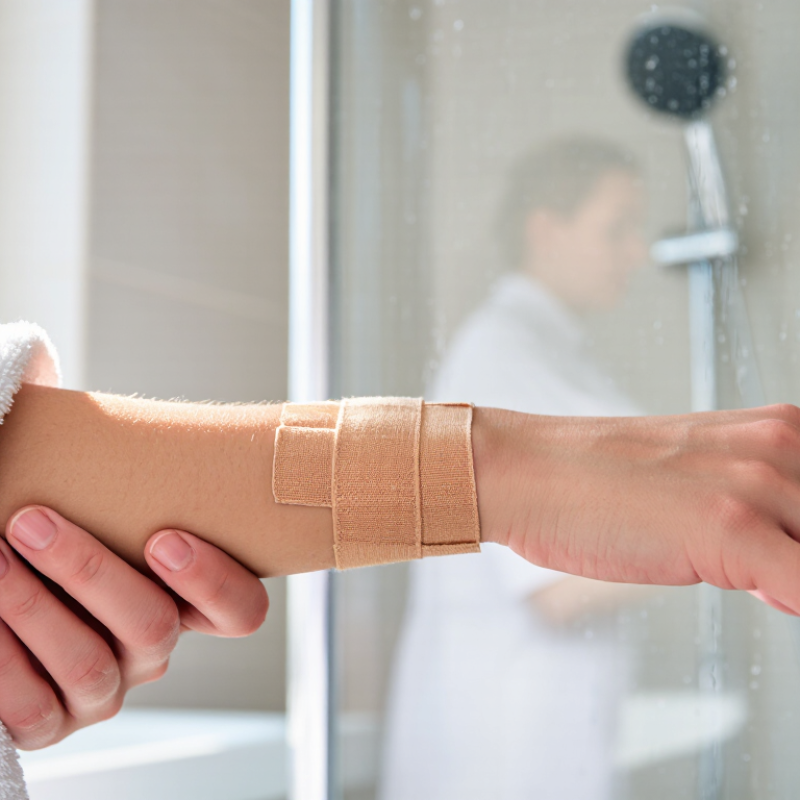
After a shower, check the wound before deciding whether its dressing can stay. Wash your hands, then look for fresh bleeding, spreading redness, swelling, or new drainage. The edges should remain closed, and the dressing should feel dry and firmly attached. Don’t peel off a dressing your clinician told you to leave in place; some surgical coverings need specific care. Check your discharge instructions.
A Cochrane review on postoperative bathing and showering reported no clear infection difference between early and delayed bathing: two trials included 857 participants, with a risk ratio of 0.96 (95% confidence interval 0.62–1.48). The evidence does not mean every wound or dressing can safely get wet. The dressing type and the wound’s condition matter.
If the dressing is soaked, loose, or visibly dirty, replace it only if you were instructed how, using clean hands and a fresh dressing. Pat nearby skin dry; don’t rub the wound. A waterproof covering may stay on if its seal remains intact. Not always obvious. If redness spreads, drainage becomes cloudy, pain worsens, or you develop a fever, contact a healthcare professional. When instructions are unclear, ask the clinician who treated the wound rather than guessing.
Before showering, place supplies on a clean, dry counter within reach. Gather a waterproof cover large enough to extend beyond the dressing, plus a clean replacement dressing, gauze, medical tape, and a small disposal bag. Keep clean scissors nearby if you need to trim tape. Check that the cover fits without pulling your skin. It should not feel tight. Keep it nearby.
A purpose-made shower cover or waterproof adhesive film can help shield a bandage, but neither guarantees a perfect seal. Follow the product directions and any instructions from your clinician. If you use plastic film, secure its edges gently over dry, unbroken skin; do not wrap tape tightly around a limb. It is easy to forget a towel until your hands are wet, so set one beside the sink before you start.
After showering, pat around the covered area dry, then remove the cover carefully. If the bandage stayed dry and your clinician said to leave it in place, avoid changing it unnecessarily. If it is wet, loose, or soiled, wash your hands and replace it with clean supplies as directed. Don’t touch the wound itself. If you are unsure whether a surgical dressing should be changed, contact your care team rather than guessing.
Before turning on the shower, check that the dressing is clean and firmly attached. Dry the skin around it first; adhesive often lifts on damp skin. For a small wound, use a waterproof dressing sized to cover the pad and its edges. If you need an extra barrier, place waterproof film over the dressing and press the edges onto dry, unbroken skin. Keep the seal snug, not tight. Check that it does not pinch or restrict circulation. It is easy to rush this step.
Keep the shower brief and use a gentle stream. Aim the water away from the covered area, and avoid soaking it or scrubbing the seal. A barrier can leak, especially around joints or where skin folds. If water gets underneath, wash your hands, remove the wet dressing, and replace it with a clean one according to your care instructions. Pat nearby skin dry rather than rubbing. Don’t leave a damp dressing in place. If the wound is deep, worsening, or showing signs of infection, ask a healthcare professional how to protect it while bathing.
After a shower, wash your hands before touching the dressing. Gently pat the skin around it with a clean towel; do not rub the wound. If the bandage is wet, soggy, or peeling at the edges, replace it. Damp fabric can irritate skin and may no longer protect the area well. Let the surrounding skin air-dry briefly if needed. No rushing.
Use a fresh, clean dressing that fits without pulling the skin tight. If the pad sticks to the wound, moisten it with clean water before lifting it; pulling can disturb healing tissue. Follow the care instructions from your clinician, especially after stitches or a procedure. I sometimes find it tempting to reuse a bandage that looks nearly dry, but appearance alone can be misleading. A clean replacement is the safer choice when the dressing is wet or loose.
Watch for worsening redness, warmth, swelling, increasing pain, pus, or fever. These changes deserve medical advice, particularly if they are getting worse. If the wound keeps bleeding or you are unsure how to cover it, contact a healthcare professional. A simple dressing change should not feel like guesswork.
After a shower, wash your hands before touching the wound or fresh dressing. Pat the surrounding skin dry with a clean towel; avoid rubbing the wound. If your dressing got wet, replace it with a clean, dry one, unless your clinician gave different instructions. Let the skin dry fully so the adhesive can hold. Place sterile gauze over the wound, then press the bandage edges gently onto dry skin. It should feel secure, not tight. Check that fingers or toes beyond the bandage stay warm and their usual color.
Tips: Keep spare dressings nearby. If an edge curls, replace the bandage rather than taping over damp skin. Small details matter.
Check the wound daily, and when changing the dressing, look for increasing redness, warmth, swelling, worsening pain, or thick, cloudy drainage. A bad smell can also be concerning. Watch for fever or redness that spreads beyond the wound. These signs do not prove an infection, but they deserve prompt advice from a healthcare professional. Seek urgent help if you feel very unwell or the wound worsens quickly. If you are unsure whether your dressing can get wet, follow your clinician’s directions. I sometimes find bandage edges lift sooner than expected; that is frustrating, but forcing a loose dressing to stay on is not worth it.
| Step or Check | What to Do | Why It Matters |
|---|---|---|
| Follow wound-care instructions | Use the dressing and change schedule recommended by your healthcare professional. If you were told to keep the wound dry, protect it from shower water as directed. | Some wounds and dressings need specific care, especially after surgery. |
| Wash your hands | Wash with soap and water before removing or applying a dressing. Prepare a clean, dry surface for supplies. | Clean hands help reduce the chance of introducing germs to the wound. |
| Remove a wet or loose dressing | After the shower, replace a bandage that is wet, dirty, or no longer sealed. If it sticks to the wound, moisten it with clean water or saline rather than pulling it off. | A damp or contaminated dressing may irritate the skin and may not protect the wound properly. |
| Dry the area gently | Pat the surrounding skin dry with a clean towel. If the wound itself needs drying, gently blot it with clean gauze; do not rub or scrub. | Dry skin helps adhesive stay in place, while gentle handling avoids disrupting healing tissue. |
| Apply a fresh bandage | Use a clean dressing that covers the wound and a small area of surrounding skin. Avoid touching the part that will contact the wound. | A clean, well-sized dressing helps shield the wound from friction and dirt. |
| Secure the edges | Smooth the adhesive edges onto clean, dry skin without stretching the tape or wrapping tightly. If using gauze and tape, secure it so it stays in place but does not restrict circulation. | Good contact helps prevent the dressing from lifting; a tight wrap can cause discomfort or impair circulation. |
| Check that it stays in place | Move gently and check that the dressing covers the wound, feels comfortable, and is not pulling on the skin. Replace it if it becomes wet, dirty, or loose. | Regular checks help you notice problems before the wound is exposed. |
| Watch for possible infection | Contact a healthcare professional if redness is spreading, pain or warmth is increasing, swelling is worsening, pus or cloudy drainage appears, or you develop a fever. | These changes can be signs of infection and may need medical assessment. |
| Seek urgent help for severe symptoms | Get urgent medical care for rapidly spreading redness, red streaks moving away from the wound, severe or rapidly worsening pain, confusion, or feeling seriously unwell. | Severe or rapidly progressing symptoms can require prompt treatment. |
Note: This information is general and does not replace medical advice. Follow your clinician’s instructions, and seek advice if you are unsure how to care for the wound or if it is not healing as expected.
Yes, if your clinician allows it and it remains dry, clean, and firmly attached. Check your care instructions.
Research found no clear infection difference between early and delayed bathing. That does not mean every wound or dressing can get wet.
Dry the surrounding skin, then cover the dressing with a waterproof barrier. Keep the seal snug, not tight.
Wash your hands and replace the wet dressing as instructed. Don’t leave it damp. No rushing.
Gently pat nearby skin with a clean towel. Don’t rub the wound; let surrounding skin air-dry briefly if needed.
Moisten it with clean water before lifting, if your care instructions allow. Pulling can disturb healing tissue.
Contact a healthcare professional for spreading redness, worsening pain, swelling, cloudy drainage, pus, or fever. Watch for worsening changes.
Follow your clinician’s instructions, especially after stitches or a procedure. If they are unclear, ask rather than guess. I might rush this step; that’s worth noticing.
Before showering, assess the wound and follow any care instructions you were given. A clean, dry bandage may be able to stay on if it is securely covered and the wound does not need a dressing change. Gather a waterproof covering, clean replacement dressing, and tape beforehand. Seal the existing bandage carefully, making sure the edges are protected without pulling or irritating the skin.
After showering, remove the covering and check the bandage. If it is wet, loose, or dirty, wash your hands, gently dry the surrounding skin, and replace it with a clean dressing. Secure the edges to dry skin, leaving enough room for comfortable movement. If you’re wondering, “Why does my bandage keep falling off after a shower?” moisture, soap residue, or tape placed on damp skin may be the cause. Check for increasing redness, warmth, swelling, pain, or unusual drainage, and seek medical advice if these appear.
