Nordi Medical
In 2026, cleanroom operators face a wider choice of wipes, garments, gloves, and packaging materials. Each product may appear lint-free, yet performance can vary under real production conditions. Why is lint-free material critical in cleanroom environments? Loose fibers can settle on wafers, lenses, medical devices, or sterile surfaces. They may also carry particles, chemicals, or microorganisms into sensitive areas. Even a small fiber can interrupt inspection, damage a coating, or trigger costly rework.
Choosing the right material requires more than reading a supplier’s label. Review fiber composition, abrasion resistance, absorbency, extractable residues, and particle-generation test data. Materials tested under recognized cleanroom methods offer stronger evidence than vague “low-lint” claims. Supplier traceability also matters. Batch records, certificates, and controlled packaging help verify consistent quality. In practical use, technicians should inspect wipes after folding, wiping, and exposure to solvents. A material that performs well in a laboratory test may behave differently against rough stainless steel edges. That difference is easy to miss.
The best choice depends on the process. Polyester knits often suit precision wiping, while cellulose blends may support controlled spill absorption. However, no material is perfectly particle-free. That limitation deserves honest review. A strong selection program combines test results, operator experience, risk assessment, and periodic requalification. It also considers storage, handling, and disposal. Clean materials can become contaminated before use. Small habits matter. This guide explains how to compare lint-free materials, question supplier claims, and build a more reliable cleanroom purchasing decision in 2026.
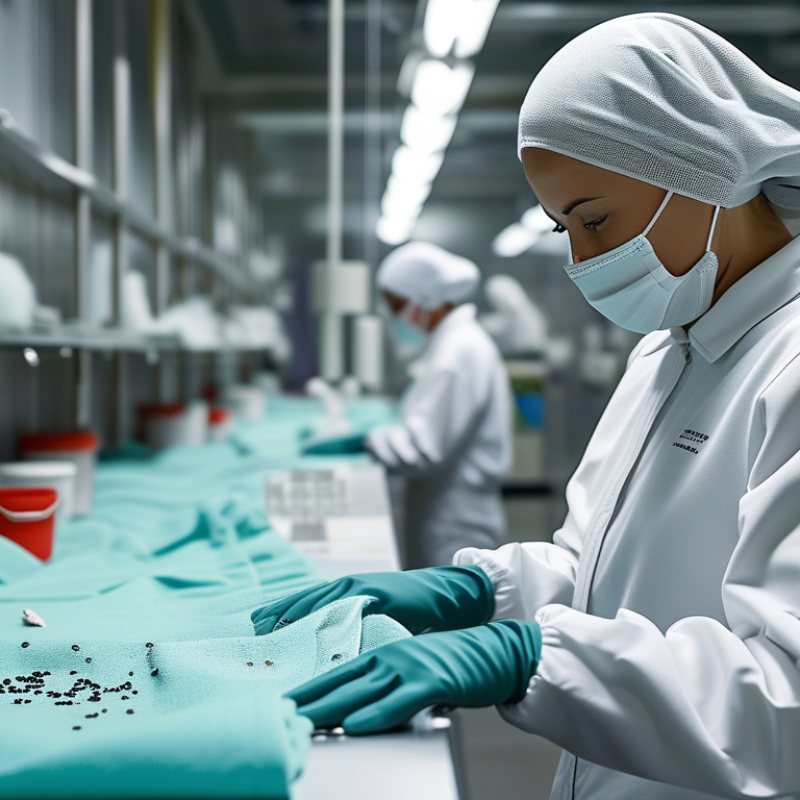
How to Choose Lint Free Materials for Cleanrooms in 2026?
Lint-free materials are engineered to release very few fibers during wiping, handling, or repeated movement. They are not completely particle-free. That distinction matters in cleanroom environments. A wipe may look spotless but still shed fibers under friction. Appearance is not proof. Select materials according to the room classification, cleaning method, and process sensitivity. Knitted synthetic wipes often offer low lint and consistent edges. Nonwoven options can provide better absorbency for spills. However, absorbency may increase residue or extractable concerns. Review particle data, chemical compatibility, static behavior, and packaging cleanliness before approval.
Tips: Test the material on the actual surface. Check it after wet and dry use. Inspect sealed packaging for damage. Record lot information and storage conditions. Small details matter. Do not choose only by price or softness. A softer wipe can sometimes leave more residue. An absorbent material may also drag contamination across a polished surface. These trade-offs need practical review, not assumptions.
Reliable selection combines supplier documentation with internal verification. Request particle-shedding results, ionic residue data, and certificates linked to the delivered lot. Then conduct a controlled trial using real gloves, solvents, surfaces, and handling motions. I have found that simulated testing can miss awkward folds and excessive pressure. That gap deserves attention. Replace damaged or poorly stored materials, even when they appear usable. Cleanroom control depends on repeatable behavior, not attractive packaging or confident claims.
How to Choose Lint Free Materials for Cleanrooms in 2026?
Cleanroom classification directly shapes material requirements. ISO 14644-1 defines airborne particle limits, but it does not approve every wipe, garment, or packaging film. In an ISO Class 5 area, materials should release very few particles during wiping, folding, or movement. Sealed-edge polyester wipes often perform better than cut-edge fabrics. Class 7 and Class 8 rooms may accept broader materials, but process sensitivity still matters. Allowed does not mean suitable.
Material selection must match the operation. For wet cleaning, choose wipes with controlled absorbency and low extractable levels. For solvent use, confirm chemical compatibility before purchasing large quantities. A material that survives alcohol may weaken after repeated exposure to another cleaner. Check particle shedding, residue, ionic contamination, and sterilization tolerance. Short tests help.
Packaging deserves equal attention. Double-bagged supplies reduce transfer risk between gowning stages, while damaged bags can introduce fibers and dust. During qualification, measure materials under realistic handling conditions, not only in a quiet laboratory. I have seen a low-shedding wipe fail because operators unfolded it too aggressively. Human technique matters. Specifications need review. Classification provides the boundary, but process evidence should decide the final material choice.
The chart shows the ISO 14644-1 maximum permitted concentration of particles ≥0.5 μm per cubic metre. As the ISO class number decreases, particle limits become more stringent. ISO Class 5 areas therefore require low-lint, low-shedding materials, sealed or laundered garments, cleanroom-compatible wipes, and packaging that minimizes particle release. ISO Class 7 and ISO Class 8 areas may allow broader material choices, but all items should still be non-shedding, chemically compatible, and suitable for the cleaning process.
Reference: ISO 14644-1:2015 particle concentration limits at ≥0.5 μm. Material selection should also consider abrasion, extractables, disinfectant compatibility, static control, and process risk.
Fiber selection often matters more than fabric appearance. Continuous-filament polyester usually sheds less than staple fibers because it has fewer loose ends. Tight warp-knit or woven structures also trap fewer particles during wiping and movement. Cellulose, cotton, and many rayon blends can release visible fibers when dry or repeatedly folded. They may feel soft, but softness is not contamination control.
ISO 14644-1:2015 allows only 3,520 particles of at least 0.5 micrometers per cubic meter in an ISO 5 room. The limit rises to 352,000 particles in ISO 7 and 3,520,000 in ISO 8. These figures explain why ordinary fabric choices become risky near exposed surfaces.
IEST-RP-CC003.5 recommends evaluating garment and wipe materials through particle-shedding, extractables, and compatibility testing. Look for washed, sealed-edge polyester, not simply “low-lint” wording.
A cleanroom glove or wipe can still shed after abrasion, laundering, or cutting. Polypropylene nonwovens may perform well for selected tasks, but their structure and electrostatic behavior require testing. My practical concern is often overlooked: a fabric that passes one shedding test may fail after repeated use. Review test conditions, particle-size ranges, and laundering cycles before approval. Supplier certificates help, but independent verification remains wiser.
Choosing lint-free materials in 2026 requires more than checking a “cleanroom grade” label. In practical cleanroom evaluations, I compare absorbency, durability, and chemical resistance together. A highly absorbent wipe can remove a spill quickly, but it may release fibers or leave residue. Polyester wipes usually offer low lint and consistent surfaces. Cellulose blends absorb more, yet they can weaken during repeated wiping. Touch matters. A rough edge often reveals poor construction.
Durability should match the cleaning routine. For stainless-steel benches, test the wipe across a dry surface for 50 repeated passes. Check for fraying, holes, and loose threads. Chemical resistance needs separate testing. Moisten samples with the actual cleaning agents, such as isopropyl alcohol or diluted hydrogen peroxide. Record swelling, discoloration, stiffness, and residue after drying. Never rely only on a supplier’s general compatibility chart. Temperature, concentration, and contact time can change performance. That detail is easy to miss.
Tips: Keep small samples from each production lot. Weigh them before and after liquid exposure. Inspect the surface under suitable lighting. Test gloves, wipes, and garments as a system. One material may perform well alone but fail beside an abrasive tool. Document results with dates and room conditions. I have found that “lint-free” is rarely absolute; it is a controlled performance target. Recheck it when processes change.
| Material Type | Typical Construction | Typical Absorbency (g liquid / g material) |
Durability | Chemical Resistance | Lint Performance | Particle Control | Best-Fit Applications |
|---|---|---|---|---|---|---|---|
| Continuous-Filament Polyester Knit | 100% polyester, knitted loops; sealed or laser-cut edges | 3.0–5.0 | Very high Maintains strength during repeated wiping |
Excellent Generally resistant to dilute acids, alkalis, alcohols, and many solvents; verify with the exact chemical |
Very low Low fiber release when properly finished |
Excellent for critical surfaces and controlled environments | Semiconductor, pharmaceutical, optics, aerospace, and precision assembly |
| Polyester Microfiber | Very fine split or unsplit polyester/polyamide filaments | 4.0–7.0 | High Good tensile strength; performance depends on filament structure |
Excellent Good resistance to alcohols and many aqueous cleaners; test strong solvents before use |
Very low Fine filaments capture particles effectively when edges are controlled |
Excellent surface cleaning and particle pickup | Optical components, display manufacturing, laboratory equipment, and final wipe-downs |
| Polypropylene Nonwoven | Meltblown or spunbond polypropylene fibers | 5.0–9.0 | Medium Suitable for light to moderate wiping; may deform under heavy abrasion |
Very good Strong resistance to many acids, alkalis, and aqueous solutions; limited resistance to some hydrocarbons and oxidizers |
Low Quality varies with bonding method and edge treatment |
Good for routine spill control and general wiping | Chemical handling areas, maintenance zones, and economical single-use wiping |
| Cellulose/Polyester Blend Nonwoven | Cellulose fibers combined with polyester reinforcement | 5.0–8.0 | Medium Good wet strength, but lower abrasion resistance than knitted polyester |
Moderate to good Usually compatible with water-based cleaners and alcohols; strong acids and solvents require testing |
Low to medium Cellulosic fibers can increase particle release if the wipe is abraded |
Good absorbency for routine cleaning and liquid pickup | Pharmaceutical support areas, healthcare environments, and general cleanroom maintenance |
| Hydroentangled Polyester/Cellulose | Water-jet-entangled polyester and cellulose fibers | 4.0–7.0 | Medium to high Improved integrity compared with loosely bonded nonwovens |
Moderate to good Suitable for many aqueous solutions; compatibility depends on cellulose content |
Low to medium Requires controlled edges and suitable pre-cleaning |
Good balance of absorbency and surface cleaning | General laboratory work, pharmaceutical operations, and controlled maintenance |
| Rayon/Polyester Blend Nonwoven | Regenerated cellulose rayon reinforced with polyester | 6.0–10.0 | Medium High liquid capacity; wet strength varies by blend ratio |
Moderate Appropriate for mild aqueous cleaners; verify compatibility with oxidizers and concentrated chemicals |
Low to medium May release more fibers under aggressive scrubbing |
Very good for high-volume liquid absorption | Spill response, equipment cleaning, and non-critical cleanroom tasks |
| Polyurethane Foam | Open-cell polyurethane foam, often laminated to a support layer | 8.0–15.0 | Medium Compressible and reusable for selected tasks; can tear under sharp-edge contact |
Moderate Good with water-based solutions; some solvents can swell or degrade the foam |
Low Low-lint grades are available, but foam integrity must be checked |
Good for controlled liquid retention and delicate contact surfaces | Small-part cleaning, precision swabbing, and liquid application |
| Medical-Grade Cotton | Natural cellulose fiber, woven or nonwoven | 10.0–20.0 | Low to medium High absorbency but lower wet abrasion resistance |
Limited to moderate Generally suitable for water and mild cleaners; not preferred for many solvents or oxidizers |
Medium to high Natural fibers can release lint during wiping |
Limited for critical particle-sensitive surfaces | Non-critical absorbent tasks, pre-cleaning, and spill control outside the most stringent zones |
Lint-free performance must be verified, not assumed from a supplier’s description. Begin with a documented material specification for each cleanroom application. Record fiber type, fabric construction, surface treatment, packaging, and acceptable particle limits. At receiving, inspect every shipment for torn packaging, moisture, stains, and loose fibers. Keep lot numbers linked to inspection records.
Use a particle-shedding test that matches the material’s real use. Wipers may require simulated wiping, while garments may need controlled movement testing. Measure airborne particles with calibrated instruments in a qualified environment. Compare results against internal limits and applicable cleanroom procedures. Visual inspection helps, but it cannot replace particle measurement. A white surface may look clean and still release microscopic fibers.
Maintenance protects performance after approval. Store materials in sealed packaging, away from cardboard dust, heat, and excessive humidity. Train operators to open packages inside approved areas. Replace damaged containers immediately. Recheck materials after process changes, long storage, or repeated handling. Keep calibration certificates and test data easy to retrieve. A failed result should trigger investigation, not quiet disposal. Look for packaging damage, unusual friction, poor handling, or testing errors. Perfect control is unlikely; honest review is essential.
: Higher classifications require tighter control of particles and residues. In very clean areas, sealed-edge polyester often performs better than cut-edge fabric. A permitted material may still fail your process.
Continuous-filament polyester usually sheds less than staple fibers. Tight woven or warp-knit structures hold fibers more securely. Appearance can mislead.
They may release visible fibers during folding, abrasion, or repeated use. Softness does not prove cleanliness. Use them only after task-specific testing.
Confirm chemical compatibility, absorbency, extractables, and residue levels. A wipe may tolerate alcohol but weaken after repeated exposure to another cleaner. Short tests prevent expensive mistakes.
Sealed, double-bagged packaging can reduce transfer between gowning stages. Inspect bags for tears, moisture, stains, and loose fibers. Damaged packaging needs immediate replacement.
Test the material during realistic wiping, folding, or movement. Use calibrated particle instruments in a qualified environment. Visual inspection alone is insufficient.
Keep them sealed, dry, and away from cardboard dust, heat, and humidity. Record lot numbers and receiving inspections. Storage can quietly change performance.
Repeated abrasion, laundering, harsh cleaners, poor handling, or damaged packaging can increase shedding. An operator unfolding a wipe too aggressively may change the result. Human technique matters.
Investigate packaging, friction, handling, equipment calibration, and test conditions. Do not quietly discard the failed sample. Perfect control is unlikely.
Choosing lint-free materials is essential for controlling contamination in cleanroom environments. Why is lint-free material critical in cleanroom environments? Because loose fibers and particles can compromise sensitive products, distort test results, and reduce process reliability. The right choice depends on the cleanroom classification and the level of particle control required. Materials should be evaluated by fiber composition, fabric structure, and shedding performance, with tightly woven synthetic fibers often offering strong particle-control properties when properly designed and processed.
A practical comparison should also consider absorbency, durability, chemical resistance, and compatibility with cleaning agents or process fluids. Highly absorbent materials may be useful for liquid spills, while durable and chemically resistant options are better for repeated cleaning and demanding operations. Performance should be verified through particle-shedding tests, cleanliness checks, and supplier documentation. Regular inspection, controlled laundering or disposal, correct storage, and proper handling are equally important to maintain lint-free performance throughout the material’s service life.
