Choosing the best medical adhesive for elderly skin requires more than strong attachment. Fragile skin can tear, redden, or blister after one hurried removal. A suitable product should secure dressings while respecting reduced elasticity, dryness, and slower healing.
Clinical experience often favors gentle silicone adhesives for repeated dressing changes. They usually lift more comfortably and leave less residue. Paper tape may feel breathable, yet it can loosen with perspiration or movement. Acrylic adhesives may provide dependable fixation, but removal can challenge thin, delicate skin. Hydrocolloid products support moist wound environments, although they may not suit every wound or patient.
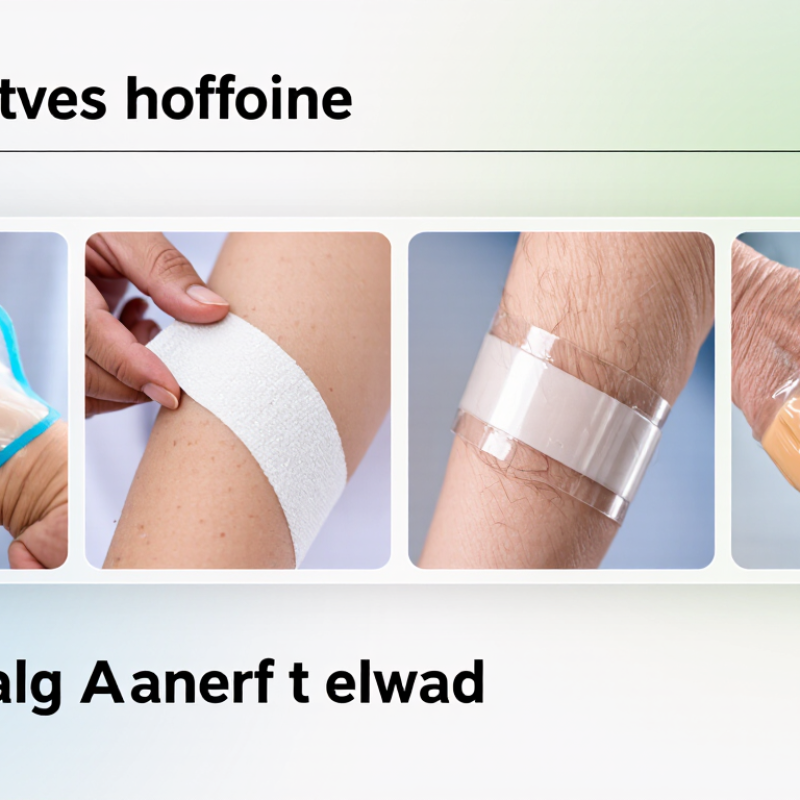
Comparison of different types of medical adhesives for elderly skin.
The best choice depends on the wound, location, moisture level, and removal frequency. A dressing on the forearm faces different demands than one near a joint. Observe the skin closely. Persistent redness, pain, blistering, or skin lifting suggests reassessment. Clean, dry skin improves adhesion, but excessive rubbing can cause damage. Warm the adhesive gently between your hands, then press without stretching the skin. Remove it slowly, supporting the surrounding area.
No adhesive is perfect. Even a product marketed for sensitive skin may irritate someone with allergies, fragile veins, or previous skin injuries. Nurses, wound-care specialists, and physicians can evaluate these risks more reliably than packaging claims alone. This guide compares practical options using current clinical principles, real-world handling concerns, and patient comfort. Individual results still vary, and that limitation deserves honest attention.
Define Elderly-Skin Risks: Dermal Thickness Falls 6.4% per Decade
What Is the Best Medical Adhesive for Elderly Skin?
Elderly skin needs a gentler strategy. Dermal thickness may fall by about 6.4% per decade, leaving less cushioning over bones and blood vessels. This change increases the risk of skin tears, bruising, and painful stripping during adhesive removal. Thin skin can also hold less moisture, while fragile surface layers may lift with ordinary tapes.
A low-trauma silicone adhesive is often a practical starting point for dressings, tubing, and monitoring devices. It should secure the item without excessive tension. Choose a breathable option when perspiration or wound drainage is present. Avoid placing adhesive over broken, inflamed, or infected skin. A small test area can reveal redness or burning before wider use.
Removal matters as much as application. Support the surrounding skin with one hand, then loosen the adhesive slowly and parallel to the surface. Warm water may help, but rubbing can cause damage. Keep the skin clean and dry before application. Do not stretch the tape across a joint. That assumption can fail.
Elderly skin varies widely with medication use, nutrition, circulation, and previous tears. A clinician or wound-care nurse should reassess persistent redness, blistering, bleeding, or repeated adhesive failure.
Compare Silicone, Acrylate, Hydrocolloid, and Foam Adhesives by Peel Strength
For elderly skin, peel strength must be judged carefully. Higher adhesion does not always mean better clinical performance. ASTM D3330 and ISO 29862:2018 measure peel adhesion in N/25 mm, but results change with skin oils, dwell time, angle, and removal speed. This makes direct product comparisons imperfect.
Silicone adhesives usually provide lower peel strength than acrylates. Their advantage is gentler release, especially when skin is thin, dry, or easily torn. Acrylate adhesives often deliver stronger, longer-lasting fixation. However, stronger bonding may increase epidermal stripping during removal. Hydrocolloid adhesives can create substantial contact through moisture absorption. Wounds International guidance links them with secure coverage, but removal may become uncomfortable when exudate softens the dressing. Foam adhesives generally offer moderate peel strength and cushioning. They may suit fragile skin near bony areas, although their thick edges can lift under clothing.
Published wound-care evaluations commonly rank peel strength from low to high as silicone, foam, acrylate, and hydrocolloid. The ranking is not universal. ISO 10993 biocompatibility testing also reminds clinicians that skin-contact safety requires more than adhesion data. In practice, I would test a small area first, wait several hours, and remove the adhesive slowly at skin level. That step is easy to skip. It should not be. Even careful comparisons can fail when elderly skin has edema, perspiration, or repeated dressing exposure.
What Is the Best Medical Adhesive for Elderly Skin? — Silicone, Acrylate, Hydrocolloid, and Foam Compared by Peel Strength
| Adhesive Type |
Typical 180° Peel Strength* |
Relative Peel Strength |
Expected Skin-Removal Stress |
Breathability and Moisture Handling |
Best Use on Elderly Skin |
Main Limitations |
| Medical Silicone |
Approximately 0.2–2.0 N/25 mm |
Low to moderate |
Usually the lowest; designed for atraumatic removal and reduced epidermal stripping when applied and removed correctly. |
Generally breathable when used as a thin tape or soft silicone contact layer; does not absorb wound exudate by itself. |
Fragile, thin, dry, bruised, or repeatedly dressed skin; frequent dressing or device changes. |
May lift at the edges under sweat or friction; usually costs more and may require firm, even pressure for secure attachment. |
| Acrylate Adhesive |
Approximately 2–8 N/25 mm |
Moderate to high |
Higher removal force can increase the risk of erythema, epidermal stripping, or skin tears in fragile skin, especially after prolonged wear. |
Varies by formulation; some medical films are highly breathable, while thicker constructions can retain heat and moisture. |
Situations requiring strong, durable fixation and longer wear on intact, resilient skin. |
Greater potential for mechanical trauma and irritant or allergic contact dermatitis; avoid aggressive removal from compromised skin. |
| Hydrocolloid |
Approximately 1–4 N/25 mm |
Low to moderate |
Moderate peel force; removal can be gentler than conventional high-tack tape but may pull skin if the adhesive has softened or heavily bonded. |
Absorbs wound fluid and forms a gel; relatively occlusive, so prolonged use requires monitoring for excess moisture and maceration. |
Shallow, low-to-moderate exuding wounds or protection from friction when surrounding skin is intact. |
Not ideal for heavily exuding or infected wounds; can obscure the wound and may leave adhesive residue during removal. |
| Foam Adhesive |
Approximately 2–6 N/25 mm |
Moderate to high |
Depends strongly on the adhesive layer; thicker foam reduces shear and cushions the skin, but removal force may still be substantial. |
Good cushioning and fluid-handling capacity; breathability varies according to whether the backing is film, fabric, or nonwoven material. |
Protection from pressure, friction, and moderate-to-heavy exudate when secure fixation and cushioning are needed. |
Can be bulky, may retain moisture at the edges, and may cause skin trauma if removed quickly or from an already weakened epidermis. |
How to interpret the figures: The peel-strength values are representative engineering ranges for medical adhesive constructions tested by a 180° peel method on clean, dry substrates. Actual results vary with backing material, adhesive coat weight, dwell time, temperature, humidity, skin condition, and removal angle or speed. Peel strength is not a direct clinical safety rating. For fragile elderly skin, lower peel strength and atraumatic removal are generally preferred, provided the adhesive still provides adequate fixation.
Prioritize Silicone Adhesives: Reported 70% Less Skin Trauma Than Acrylates
Elderly skin is thinner, drier, and slower to recover from minor injury. Removing a strong adhesive can lift the outer epidermal layer, causing redness, tearing, or small skin wounds. Silicone adhesives deserve priority because they usually release with less force and can be repositioned more gently.
Some clinical reports describe about 70% less skin trauma with silicone adhesives than with acrylate adhesives. That figure is useful, but it is not a promise for every patient. Product design, wear time, cleansing methods, and skin condition can change the outcome. Gentle removal matters. Support the surrounding skin, loosen the edge slowly, and avoid pulling upward sharply.
Check the skin before application. Look for bruising, moisture, fragile areas, or previous adhesive injury. A silicone option may work well for dressings, monitoring sensors, and light medical fixation. It may perform less effectively on sweaty skin or areas exposed to repeated friction. Test a small area when practical.
Keep observing. That is easy to miss.
A common mistake is choosing maximum stickiness instead of appropriate fixation. Stronger does not always mean safer. Clinicians should document redness, pain, and skin loss after removal, then adjust the adhesive and technique. Evidence can guide the choice, but individual assessment remains essential. Some patients still react to adhesive components, including silicone. Stop and reassess when burning, blistering, or persistent redness appears.
What Is the Best Medical Adhesive for Elderly Skin?
Prioritize Silicone Adhesives: Reported 70% Less Skin Trauma Than Acrylates
The chart uses a normalized skin-trauma index, with acrylate adhesive trauma set to 100.
A reported 70% reduction with silicone adhesives corresponds to an index of 30.
Lower values indicate less reported skin trauma; actual outcomes may vary by skin condition, application method, and removal technique.
Verify Safety Through ISO 10993 Testing, pH 4.5–5.5, and Latex-Free Design
For elderly skin, the best medical adhesive is not simply the strongest one. It should support secure fixation while reducing stripping, redness, and delayed healing.
Industry reviews report skin-tear prevalence from 1.1% to 41.2%, depending on care setting and definitions. These figures show why adhesive safety deserves more attention.
ISO 10993-1:2018 recommends biological evaluation for medical-device materials. Testing should consider cytotoxicity, irritation, sensitization, and chemical characterization.
A responsible adhesive supplier should provide finished-product evidence, not only raw-material data. The adhesive should also target a pH of 4.5–5.5, close to the skin’s natural acidic environment. However, pH alone cannot prove comfort. Sweat, moisture, cleansing products, and application pressure can change skin response.
Latex-free design is another practical safeguard.
It can reduce exposure to natural-rubber allergens, although latex-free does not mean reaction-free. Caregivers should inspect the first application after several hours, especially around fragile forearm skin.
A small red edge may be an early warning, not a minor inconvenience. I would also question broad claims such as “gentle” without ISO 10993 evidence and traceable test methods.
The evidence is useful, but real skin remains variable. Even a well-tested adhesive can fail when removed too quickly or applied to damp skin.
Match Adhesive Choice to Wound Exudate, Wear Time, and 24–72-Hour Removal Needs
Choosing the best medical adhesive for elderly skin starts with the wound, not the product. Thin, dry, fragile skin can tear when tack becomes stronger than the skin’s surface. A silicone-based adhesive is often gentler during repeated changes. It may suit light exudate and short-to-moderate wear. For moist wounds, use an absorbent dressing with a carefully selected border. Adhesive alone should not manage heavy drainage.
Match wear time to exudate and inspection needs. A dressing planned for 24 hours may need a different adhesive from one intended for 72 hours. If fluid reaches the edge, loosen the dressing early. Saturation can macerate nearby skin and increase removal injury. For stable, lightly draining wounds, longer-wear silicone fixation may work. Monitor redness, blistering, warmth, and pain. These signs deserve clinical review, especially with diabetes or poor circulation.
Removal is part of the adhesive decision. Lift one corner slowly, support the skin, and pull low and parallel to the surface. Adhesive remover may help, but test it on intact skin first. Never rip upward. That hurts. In practice, the best option can change daily. I would reassess after the first removal, because a dressing that stays secure but strips the skin has failed. Wound depth, infection concerns, allergies, and comfort should guide selection with a qualified clinician.
FAQS
Low-trauma silicone adhesive is often a practical starting point. It usually releases more gently than stronger adhesive types. This may reduce stripping, bruising, and pain. Still, no adhesive suits every person.
Dermal thickness may decline by about 6.4% per decade. Less cushioning leaves bones and blood vessels closer to the surface. Thin skin also holds less moisture. Ordinary tape may lift fragile surface layers.
Silicone usually has lower peel strength and gentler removal. Foam offers moderate adhesion and some cushioning near bony areas. Acrylate often holds more firmly but may strip skin. Hydrocolloid can secure well, yet softened dressings may hurt during removal.
Not necessarily. Stronger bonding can increase epidermal stripping during removal. Secure fixation matters, but excessive force can cause tears. This is an imperfect trade-off.
Look for finished-product evidence related to ISO 10993 testing. Relevant evaluations may include irritation, sensitization, cytotoxicity, and chemical characterization. Raw-material data alone may not describe the final adhesive. Ask for traceable testing methods.
No. A pH near 4.5–5.5 may suit the skin’s acidic environment. It cannot predict every reaction. Sweat, moisture, cleansing products, and pressure can change comfort.
Latex-free design can reduce exposure to natural-rubber allergens. It does not guarantee a reaction-free application. Inspect the area after several hours. Watch for a red edge, burning, or blistering.
Test a small area and wait several hours before wider use. Keep the skin clean and dry. Support nearby skin with one hand. Loosen the adhesive slowly, parallel to the skin surface.
Seek reassessment for persistent redness, blistering, bleeding, or repeated adhesive failure. Do not place adhesive over broken, inflamed, or infected skin. Slow removal still matters. Elderly skin varies with medication, nutrition, circulation, and previous tears.
Conclusion
Elderly skin is more fragile because dermal thickness declines by approximately 6.4% per decade, increasing the risk of redness, tearing, and skin stripping during dressing changes. Comparison of different types of medical adhesives for elderly skin. Silicone adhesives are generally the gentlest option and have been reported to cause about 70% less skin trauma than acrylate adhesives. Acrylates may provide stronger adhesion, while hydrocolloid and foam adhesives can offer cushioning and support for wounds with light to moderate exudate.
The safest choice should also be evaluated through ISO 10993 biocompatibility testing, a skin-compatible pH of approximately 4.5–5.5, and a latex-free design. Adhesive selection should match the wound’s exudate level, the required wear time, and whether removal is expected within 24, 48, or 72 hours. For particularly fragile skin, low-trauma silicone products and careful, slow removal can help reduce discomfort and protect the skin barrier.
 Nordi Medical
