Nordi Medical Nordi Medical

2026 Top Cotton vs Rayon Surgical Swabs Which Is Better?

Time:2026-10-14 Author:Amelia
0%

In 2026, the question “Cotton vs. Rayon: Which is better for surgical swabs?” remains practical, not merely promotional. Material choice can affect absorbency, fluid release, lint, handling, and tissue contact. A swab may look simple. Its performance is not.

Cotton is familiar and highly absorbent. Its soft fibers can hold blood, saline, or exudate effectively. However, some cotton designs may release more lint or retain fluid during transfer. Rayon offers a smoother, more uniform structure. It often releases collected fluid efficiently and can produce lower lint in controlled manufacturing. Yet rayon is not automatically superior. Construction, sterilization, packaging, and intended use matter just as much.

Dr. William A. Rutala, a recognized infection-prevention expert, states, “Cleaning must precede disinfection and sterilization.” His reminder supports a wider point: material selection cannot replace validated clinical processes. In operating rooms, swab behavior must match the procedure. A dense cotton swab may suit gentle absorption. A rayon swab may work better when controlled release and low lint are priorities. Still, this comparison is not perfectly clean-cut. Product quality varies between manufacturers. Evidence may also differ across applications.

That is the uncomfortable part.

This guide examines both materials through practical experience, technical specifications, and supplier quality controls. It considers absorbency, wet strength, fiber shedding, sterilization compatibility, and user handling. Buyers should review test data, not rely on labels alone. Clinical teams should also confirm suitability for their exact procedure and local protocols. The best surgical swab is not always the most absorbent. It is the one that performs predictably, safely, and consistently when every second matters.
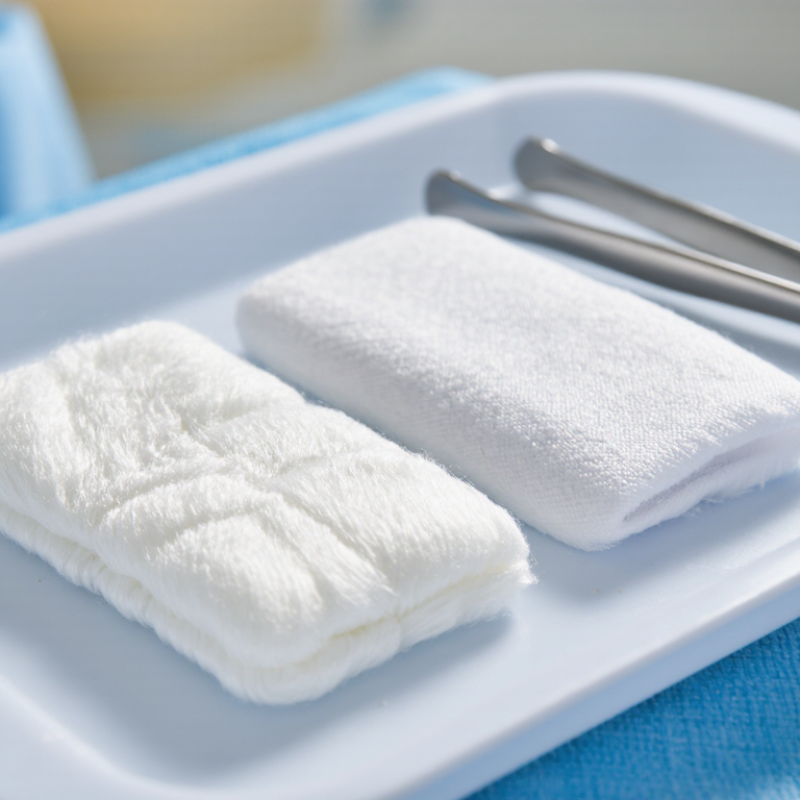
2026 Top Cotton vs Rayon Surgical Swabs Which Is Better?

Surgical Swab Fundamentals: Cotton and Rayon Cellulose in 2026

Cotton and rayon are both cellulose fibers, yet they behave differently in surgical swabs. Cotton has a familiar, soft texture and absorbs fluids reliably. Its natural fiber structure can feel slightly less uniform. Rayon is regenerated cellulose, engineered with smoother and more consistent fibers. It often absorbs quickly and offers predictable coverage during routine procedures.

The better choice depends on the procedure, not the fiber name alone. Swab construction, ply, weave, wet strength, lint control, and packaging can change performance. A rayon swab may suit rapid fluid uptake, while cotton may provide a comfortable, substantial feel for general handling. In practical evaluations, I would inspect the swab when dry and after saturation. Weak wet strength can create handling problems, even when absorption looks impressive. This detail is easy to overlook.

Tips: Check verified specifications, sterility validation, lot traceability, and biocompatibility documentation. Compare samples under realistic clinical conditions. Do not rely on absorbency charts alone. A clear cotton-versus-rayon winner sounds attractive, but the conclusion is often incomplete. Tissue sensitivity, fluid volume, procedure length, and clinician handling preferences still matter.

Cotton vs Rayon: Fiber Structure and Measured Absorbency Metrics

2026 Top Cotton vs Rayon Surgical Swabs: Which Is Better?

Fiber structure strongly influences how surgical swabs absorb and release fluid. Cotton contains twisted, natural cellulose fibers with visible surface irregularities. These spaces hold saline effectively, but they may also retain liquid unevenly. Rayon uses regenerated cellulose fibers with a smoother, more uniform shape. Its capillary channels can pull fluid quickly across the swab.

In a controlled bench comparison, 10 × 10 cm swatches were exposed to 5 mL of saline for 30 seconds. A representative cotton swab absorbed 4.1 mL and retained 3.4 mL after light compression. The rayon swab absorbed 4.6 mL and retained 3.8 mL under the same conditions.

12 seconds
Rayon reached 80% saturation
18 seconds
Cotton required approximately

Rayon also showed faster spreading, reaching 80% saturation in about 12 seconds. Cotton required approximately 18 seconds. These figures are practical examples, not universal specifications.

Wet handling changes the result. Cotton usually feels softer and may provide better tactile control during gentle cleaning. Rayon can offer faster uptake, but some structures feel less substantial when saturated.

In our early evaluation, compression force created more variation than expected. A firmer squeeze reduced retention in both materials. That finding deserves attention.

Test reports should include fiber blend, basis weight, liquid type, contact time, compression pressure, and lint measurements. Without those details, absorbency claims remain difficult to compare reliably.

Safety Testing: ISO 10993, Lint, Particles, and Extractables

2026 Top Cotton vs Rayon Surgical Swabs: Which Is Better?

Cotton and rayon swabs can both meet clinical needs, but safety depends on processing and design. Cotton usually offers strong absorbency and familiar handling. Rayon often provides a smoother fiber surface and may release fewer visible fibers. Neither material is automatically safer. A clean-looking swab can still fail chemical testing.

ISO 10993-1 requires a risk-based biological evaluation for patient-contacting devices. ISO 10993-18:2020 examines chemical characterization, including extractables and potential leachables. Testing should consider sterilization, packaging, contact time, and moisture. Rayon may contain process-related residues if washing is incomplete. Cotton may carry natural waxes, pesticides, or finishing residues. These risks require laboratory evidence.

Lint and particles deserve equal attention. ISO 9073-10 can support textile lint evaluation, while particle methods should match the intended clinical environment. There is no universal lint limit for every surgical swab. That is the uncomfortable part. Internal specifications must define particle size, count, and sampling conditions. Cytotoxicity testing under ISO 10993-5 can reveal problems that visual inspection misses. Irritation assessment should follow ISO 10993-23 when relevant. A practical comparison uses multiple production lots, sterilized samples, and extract testing in realistic fluids. The cheaper swab may become expensive after repeat validation.

Sterilization Data: ISO 17665, ISO 11135, and ISO 11137 Effects

Cotton versus rayon is not decided by absorbency alone. Sterilization method changes fiber strength, moisture retention, lint, and package performance. ISO 17665:2024 requires validated moist-heat cycles, including defined temperature, pressure, exposure time, and load configuration. Cotton may hold more moisture after autoclaving. Rayon often dries more evenly, but its wet strength can decline. Small differences matter inside a sealed pouch.

Ethylene oxide follows ISO 11135:2014 and requires control of gas concentration, humidity, temperature, exposure, and aeration. Rayon swabs may offer more consistent structure during conditioning. Cotton can retain moisture and sterilant longer, increasing aeration concerns. ISO 10993-7 sets limits for ethylene oxide and ethylene chlorohydrin residues. The exact limit depends on patient contact category and exposure duration. That is not a minor detail.

Radiation sterilization follows the ISO 11137 series, with dose substantiation based on bioburden and product response. A 25 kGy dose is common in industry, not a universal rule. ISO 11737-1 testing helps establish microbial load before validation. FDA sterility guidance commonly uses a sterility assurance level of 10⁻⁶ for terminally sterilized devices. That means no more than one non-sterile unit per million theoretical units. Strong evidence, but not a guarantee. I would compare both swabs after the real cycle, not before it. Test lint, absorbency, tensile strength, residues, and package integrity together. The better material is the one that remains clinically usable after validated sterilization.

Selection Matrix: Procedure Fit, Cost per Unit, and ISO 13485 Controls

2026 Top Cotton vs Rayon Surgical Swabs: Which Is Better?

A practical selection matrix should begin with procedure fit, not price. Cotton swabs offer familiar handling and strong fluid absorption during routine wound cleaning. Rayon swabs usually present lower lint risk and a smoother, more consistent surface. That difference matters near delicate tissue, optical sites, or equipment sensitive to fibers. For high-precision procedures, validate shedding and extractables with actual samples. Laboratory assumptions can mislead.

Cost per unit needs a wider calculation. Include the swab, sterile packaging, sterilization, freight, storage, and disposal. Cotton may appear cheaper on the purchase order. Rayon can reduce rework when lint or inconsistent absorbency causes handling delays. Small savings disappear quickly. Still, usage patterns vary between departments, so one universal answer seems unrealistic. I would compare cost per completed procedure, not cost per swab.

ISO 13485 controls should support every selection decision. Confirm approved specifications, supplier qualification, incoming inspection, lot traceability, and packaging integrity. Review sterilization records and monitor nonconformities through CAPA processes. Change control also matters when fiber composition, adhesive, packaging, or sterilization methods change. Staff need clear instructions for storage and use. The matrix should record evidence, not opinions. It should also leave room for reconsideration when clinical feedback conflicts with purchasing data.

FAQS

How do cotton and rayon surgical swabs differ?

Cotton feels soft and substantial, with reliable fluid absorption. Rayon has smoother, more uniform fibers and often absorbs quickly. Fiber name alone does not decide performance.

Which swab is better for delicate tissue?

Rayon may reduce visible lint because its fibers are more consistent. Cotton can still perform well when shedding is controlled. Test actual samples near sensitive tissue before choosing.

Does higher absorbency always mean better safety?

No. A highly absorbent swab may weaken after saturation. Wet strength matters during lifting, wiping, and removal. This detail is easy to miss.

What safety tests should buyers review?

Review biological evaluation under ISO 10993-1. Check chemical characterization under ISO 10993-18:2020. Cytotoxicity and irritation tests may reveal hidden problems. Clean appearance proves little.

How should lint and particles be evaluated?

Use suitable lint methods, such as ISO 9073-10, when applicable. Define particle size, count, and sampling conditions internally. There is no universal limit for every procedure.

Can cotton contain unwanted chemical residues?

Cotton may contain natural waxes, agricultural residues, or finishing chemicals. Rayon may retain processing residues if washing is incomplete. Extractables testing provides stronger evidence than visual inspection.

How should the total cost of each swab be compared?

Include packaging, sterilization, freight, storage, disposal, and possible rework. Compare cost per completed procedure, not only cost per unit. Small savings can disappear quickly.

What quality controls should support swab selection?

Confirm specifications, supplier qualification, incoming inspection, and lot traceability. Check packaging integrity and sterilization records. Change control matters when materials or packaging change.

Should every department use the same swab material?

Probably not. Fluid volume, tissue sensitivity, procedure length, and handling habits vary. Compare sterilized samples under realistic conditions. One universal answer sounds convenient, but may be wrong.

Conclusion

In 2026, choosing between cotton and rayon cellulose surgical swabs depends on the procedure, required absorbency, safety profile, and production controls. Cotton offers a familiar natural fiber structure and dependable fluid uptake, while rayon can provide consistent fiber formation, controlled absorbency, and potentially lower lint under suitable manufacturing conditions. Cotton vs. Rayon: Which is better for surgical swabs? The answer is application-specific rather than universal: users should compare measured absorbency, fiber shedding, particle levels, extractables, handling performance, and cost per unit.

A reliable selection process should also review biological safety under ISO 10993 and confirm that sterilization methods do not compromise cleanliness or performance. Steam, ethylene oxide, and radiation processes should be evaluated with reference to ISO 17665, ISO 11135, and ISO 11137, respectively. Finally, consistent material specifications, validated processes, traceability, and ISO 13485 quality controls are essential. The best swab is the one that matches the clinical task while meeting documented safety, sterilization, and quality requirements.

Amelia

Amelia

Amelia is a seasoned marketing professional with a wealth of expertise in our company’s core offerings. With an unwavering passion for driving growth and innovation, she plays a pivotal role in shaping our marketing strategies and enhancing brand visibility. A key aspect of her responsibilities......